Sign the Letter
An Open Letter to Head Start Educational Academy

Teach Our Children to
Create the Future,
Not Fear It

An open letter from parents who want to bring the world's best thinking on entrepreneurship to the school we love.

Written by Prasanna Krishnamoorthy
Parent, Grade 5 · Co-Founder & GP, Upekkha (280+ startups) · Board colleague of Prof. Saras Sarasvathy
Scroll
The Stakes

Two Students. Same School.
Different Futures.

Priya

Prepared for a World That No Longer Exists

Brilliant. Hardworking. Excellent board scores. But by the time she graduates, the world has shifted in ways no one predicted. Industries have restructured. The career paths she prepared for look nothing like she expected.

She has every skill — except the instinct to act. She waits for direction, for structure, for someone to create an opportunity for her. She was taught to execute plans — not to create them.

Arjun

Equipped to Shape What Comes Next

Same school. Same year. Same intelligence. But somewhere in middle school, Arjun learned to think differently. He learned to start with what he has. He learned that uncertainty isn't a threat — it's a canvas.

When the world shifts, he doesn't freeze. He sees the gaps and builds in them. Not because he's braver — but because someone taught him the method.

"The difference between these two students is not talent. It is training. And that training is now proven to work."
Happy students raising their hands in a classroom
The Letter
April 2026
To the Leadership & Faculty of Head Start Educational Academy

Dear HSEA Team,

I'm writing as a parent. My twins are entering 5th grade at HSEA this year. Like every parent here, I chose this school because of its spirit — the belief that learning should be continuous, spontaneous, and meaningful. That a school should not be driven by fear. That children should learn to take decisions and stand by them.

I've spent the last decade working with over 280 startups as Co-Founder of Upekkha, India's largest B2B SaaS accelerator. I sit on boards. I work closely with Prof. Saras Sarasvathy, the world's leading researcher on entrepreneurial thinking. But what moved me to write this letter isn't my professional life — it's a body of research that changed how I think about what our children need.

I'm not alone in this conviction. Fellow HSEA parents and supporters share it — among them Aneesh Reddy, Co-Founder & CEO of Capillary Technologies, and Nags, Founder of [24]7.ai, one of HSEA's earliest supporters whose two children are HSEA graduates. We see AI reshaping the economy in real time, and we want our children to have the tools to navigate what comes next — not just as employees, but as creators.

What gave us conviction is that entrepreneurial thinking is no longer a vague aspiration — it is now a proven, teachable method. When Denmark integrated it into secondary schools nationwide, the results were striking: a 40% increase in real ventures with real revenues within three years of graduation, with no reduction in academic performance. The research is clear. The evidence is in.

We are not proposing a curriculum or a program. We are sharing research that deeply moved us, and offering to help HSEA explore what entrepreneurial education could look like — in whatever form feels right to the school.

What follows is the data, the research, and the stories that shaped our thinking. I hope they resonate with you as deeply as they do with us.


With respect and partnership,
Prasanna Krishnamoorthy
Parent, Grade 5 · Co-Founder & GP, Upekkha
prasannais.com
Students running and laughing together in school
The Gap

India's Entrepreneurship Problem

This is not a talent problem. It is a training problem.

United States
23%
Brazil
17%
United Kingdom
~12%
China
~10%
India
5%
Percentage of population who are entrepreneurs · Global Entrepreneurship Monitor
0%
of Indian youth say they
have the skills to start a business
61-point gap
0%
actually intend to pursue
entrepreneurship

That 61-point gap is not a lack of ability. It is a lack of agency. Our education system teaches children to be capable — but not to act on their capability. Effectual thinking closes that gap.

The Data

The World They'll Graduate Into

AI is already reshaping the economy. The children in school today will graduate into a world that looks nothing like the one we grew up in.

0
jobs projected to be displaced globally by 2030
0
new roles will emerge — requiring entirely new skills
0
of core job skills will change by 2030
0
of current work hours could be automated by today's AI
Jobs Displaced
92M
New Jobs Created
170M
Net gain: +78 million roles — but they require new skills
Right now

Every child in school today will graduate into this world. Industries are restructuring, new fields are emerging, and the career paths we take for granted are changing fundamentally. What they learn now will determine whether they navigate that world — or are overwhelmed by it. And we now have a proven method to teach them.

The question isn't whether disruption is coming. It's whether our children will be the ones shaping it — or being shaped by it.
The Research

There Is a Science to Entrepreneurship

And the world's leading researcher on it is right here in Bangalore.

Prof. Saras D. Sarasvathy

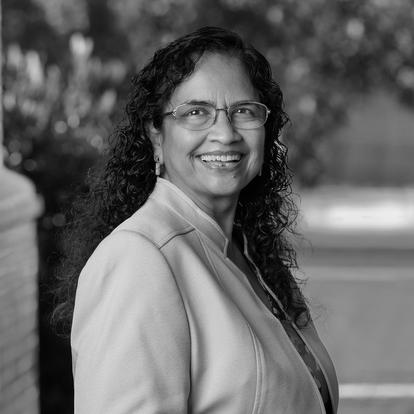
Prof. Saras D. Sarasvathy is the Paul M. Hammaker Professor at the University of Virginia's Darden School of Business and holds the Jamuna Raghavan Chair in Entrepreneurship at IIM Bangalore. In 2022, she received the Global Award for Entrepreneurship Research — the highest recognition in the field.

She serves on the board of Upekkha, where she works closely with our team. She will be in Bangalore this June and July, and has expressed willingness to engage directly with HSEA's leadership.

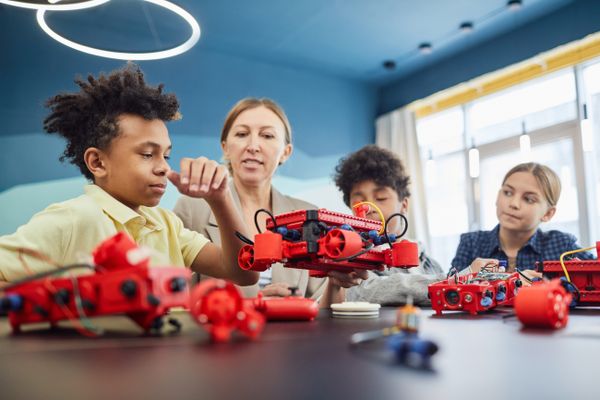
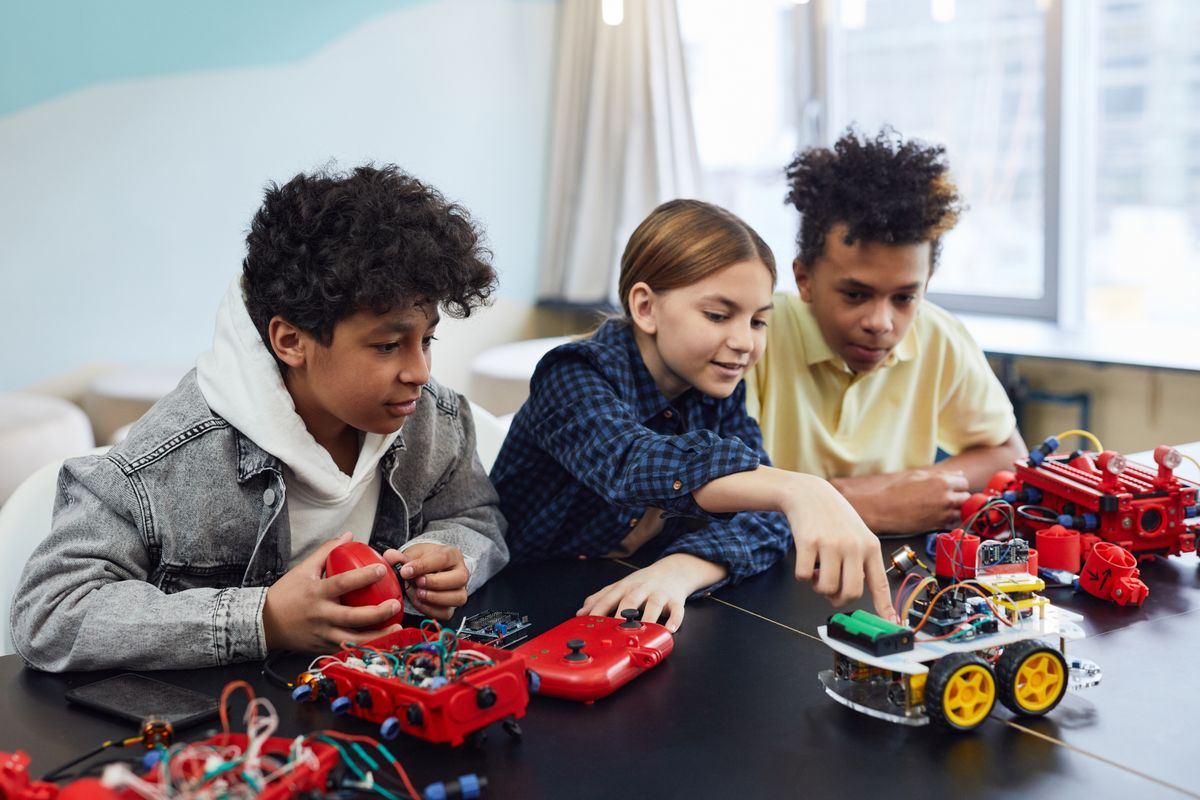
Children building robots together at a robotics workshop

The Discovery

Her groundbreaking research studied 27 expert entrepreneurs — founders who had built companies from scratch, taken them public or sold them, with a minimum of 15 years of experience. She gave them a standardised set of 10 startup decisions and recorded how they thought through each one.

The finding was striking: 65% of these expert entrepreneurs used a common decision-making approach 75% of the time. She called it effectuation — and it overturned the old belief that entrepreneurs are simply born risk-takers or gifted visionaries.

Entrepreneurial expertise is not an innate trait. It is a learnable method — like the scientific method.
A handwritten list on paper

Causal Thinking

"Following a recipe"
Set a goal → Gather resources → Execute the plan → Achieve predicted outcome
Works in predictable environments. Taught in most schools today.
Jars of ingredients on a kitchen shelf

Effectual Thinking

"Cooking with what's in your kitchen"
Start with what you have → Imagine possibilities → Take action → Shape the outcome
Works under uncertainty — which is the world our children will inhabit. Taught almost nowhere at the K-12 level.

The Five Principles of Effectuation

Each is intuitive to children — because children are natural effectuators.

1

Bird-in-Hand

Start with who you are, what you know, and whom you know.

A student who loves drawing and knows her neighbourhood can create a comic about local history.

2

Affordable Loss

Only risk what you can afford to lose — don't bet everything on a prediction.

Try a small experiment first. If it doesn't work, you've lost a weekend, not a year.

3

Crazy Quilt

Build partnerships with people willing to commit, rather than searching for the "perfect" partner.

Ask the classmate who's interested, not the one who's "best." Co-create with who shows up.

4

Lemonade Principle

Leverage surprises instead of avoiding them.

Your science project failed? Look at what happened instead — that unexpected result might be more interesting.

5

Pilot-in-the-Plane

Focus on what you can control. Don't predict the future — create it.

You can't control the market for your lemonade stand. But you can control where you set it up, what you charge, and who you invite.

Watercolor illustration of happy kids running a lemonade stand

Proof It Works

Denmark's National Experiment

In 2005, Denmark made a bold decision: integrate entrepreneurship education across its secondary schools as nationwide policy. A peer-reviewed study by Nielsen, Heblich & Sarasvathy tracked the results using two decades of longitudinal data.

0%
increase in real ventures

Not intentions. Not attitudes. Actual businesses with real revenues and real employment — within 3 years of graduation.

no reduction in academic scores

The Cape Verde government pilot (2014-17) confirmed: entrepreneurial education improves engagement without harming academic performance.

0
countries now teaching effectuation

Universities across 30+ countries have adopted effectuation. High schools in the US, Europe, and Japan are integrating it. The movement is global.

The evidence is no longer theoretical. Entrepreneurial thinking can be taught, it works in practice, and it does not come at the cost of academic rigour. What was once an experiment is now a proven approach.

Sources: Nielsen, Heblich & Sarasvathy, Strategic Entrepreneurship Journal 2025 · FFE Impact Report 2014 · Cape Verde Ministry of Education (2014-17)

"Teach effectual entrepreneurship to everyone, the way we teach science to everyone. Understand entrepreneurship as a method that everyone needs to learn and use, not only potential entrepreneurs."
Prof. Saras Sarasvathy — 2023 Schumpeter Lecture, European Commission

She has also said directly: "Entrepreneurship should be taught at the school level, not just the college or university level."

Hear It From Them

The Framework

Entrepreneurial Thinking Is Not "Business Class"

It's a mode of reasoning that applies to every domain your students will explore.

🔬

In Science

Form a hypothesis. Test it. Get unexpected results. Pivot. Iterate. The scientific method is effectuation applied to nature. Scientists don't predict discoveries — they create the conditions for them.

🎨

In Art

Start with your materials, your instincts, your obsessions. Create without a predetermined outcome. Every great artist begins with what's in their hands — and discovers what's possible through the act of making.

🌍

In Social Change

See a problem. Start with what you have. Build coalitions with whoever shows up. Every social movement — from the Right to Information Act to climate activism — was started by someone who refused to wait for the "right" conditions.

🧭

In Personal Growth

Who am I? What do I know? Whom do I know? These are the foundational questions of both effectuation and self-knowledge. Teaching children to start from these questions gives them agency over their own lives.

💻

In Technology

The entire AI revolution is being built by people who act under radical uncertainty. They don't know what will work. They build, test, learn, and adapt. This is effectuation at industrial scale.

🤝

In Leadership

Leading isn't about having a perfect plan. It's about mobilising people around a shared commitment, adapting to surprises, and building the path as you walk it. Every student who leads a group project is practising this.

Children learning together in a classroom
"Dream is not that which you see while sleeping. It is something that does not let you sleep." APJ Abdul Kalam
The Evidence

They Didn't Wait for Permission

Young people around the world are already proving that entrepreneurial thinking has no minimum age.

Tilak Mehta

Papers N Parcels — Needed textbooks delivered across Mumbai. Found no affordable same-day option. Instead of complaining, he built a courier service by partnering with Mumbai's legendary Dabbawala network. By 2026, the company operates at a scale of over Rs 100 crore in turnover. He started with a problem he personally experienced and the resources around him — textbook effectuation.

Sharad Sagar

Dexterity Global — Believed that the next generation of leaders are sitting in classrooms right now. Founded Dexterity Global to connect students in remote areas with opportunities. Reached 1.2 million students. Forbes 30 Under 30. Invited to the White House by President Obama. He started from a classroom in Bihar.

Agnishwar Jayaprakash

Ignite-India — Left a promising international swimming career to found a platform promoting innovation and entrepreneurship in high schools across India. Meanwhile, in Sweden, graduates are producing biodegradable packaging. In Ghana, student startups convert agricultural waste into biofuel. In Brazil, young entrepreneurs built a literacy programme using mobile gaming.

None of them had an MBA. None of them waited for the "right" time. They started with who they were, what they knew, and whom they knew.
The Impact

Entrepreneurs Don't Just Create Companies

They create jobs, they create movements, they create meaning.

Commercial EntrepreneurshipCreating Livelihoods

India now has over 200,000 recognised startups. Bangalore alone is home to dozens of unicorns. Behind every startup is a founder who created jobs that didn't exist before — software engineers, data scientists, content creators, community managers — roles that no school curriculum anticipated.

Behind every founder is a moment of deciding: I can build this. That moment of agency is what entrepreneurial thinking teaches.

Social EntrepreneurshipCreating Change

Harish Hande built SELCO to bring solar energy to rural Karnataka — over 115,000 installations. Jeroo Billimoria created Childline, a toll-free helpline for children in distress, now operating internationally. Anshu Gupta founded Goonj, transforming clothing into a tool for rural dignity and development.

Each of them looked at a problem others accepted, and said: this doesn't have to be this way.

The ability to look at the world, see what's broken, and believe you have the power to fix it — that is the deepest gift we can give our children.
The Opportunity
Head Start Educational Academy logo

Why Our School. Why Now.

Head Start is uniquely positioned to lead this.

Bangalore Is a Living Classroom

HSEA sits in the heart of India's startup capital. Your students see startup offices, coworking spaces, and venture capital firms every day on their way to school. Bangalore has produced Infosys, Wipro, Flipkart, and hundreds of unicorns. The city itself is a living classroom for entrepreneurship.

And yet — no K-12 school in Bangalore formally teaches entrepreneurial thinking.

Students collaborating on a project together

The Montessori Alignment

The Montessori philosophy that forms the foundation of Head Start — self-directed learning, following the child's curiosity, hands-on exploration, learning by doing — is already deeply aligned with effectual thinking.

"Education is about exposure, not worrying about outcome but making sure the process is right."

Those are HSEA's own words — and they describe effectuation in the language of education. Prof. Sarasvathy says the same thing in the language of entrepreneurship: focus on means, not predictions. The alignment is not coincidental. It is foundational.

The Entrepreneurial DNA

HSEA itself was built through entrepreneurial thinking. In 2005, Riad Mahmood started with what he had — ten children and a single room — partnered with those who believed, built through uncertainty, and created something no one could have predicted. The entrepreneurial spirit is already in HSEA's DNA. We are simply asking that it be named and nurtured.

Woven In, Not Bolted On

This doesn't require adding a new "subject" to an already full curriculum. Effectual thinking can be woven into existing subjects:

  • Science class — Students don't just do experiments; they run them like entrepreneurs, forming hypotheses about problems they care about, testing with real constraints, pivoting when results surprise them.
  • Art class — Projects framed around starting with available materials and discovering what's possible, rather than executing a predetermined assignment.
  • Social studies — Studying social entrepreneurs alongside political leaders. Understanding how change actually happens — through agency, not just through institutions.
  • Group projects — Framed as effectual ventures: What do we have? What can we afford to try? Who wants to join?

The First-Mover Opportunity

Stanford, UVA Darden, IIM Bangalore, and universities across 30+ countries have adopted effectuation. High schools in the US, Europe, and Japan are beginning to integrate it. The movement is global.

HSEA, with its Montessori roots, its independent spirit, and its location in India's innovation capital, has the opportunity to be the pioneering K-12 institution in India. The school that teaches its students not just to prepare for the future, but to create it.

HSEA's motto says it: "Our Tomorrow Is Today."
Questions & Answers

Questions We'd Want to Ask
If We Were in Your Position

We've thought about this from your chair.

Doesn't HSEA already teach many of these skills?

Yes, absolutely. HSEA's Montessori roots, emphasis on process over outcome, and commitment to holistic development already contain the seeds of effectual thinking. What we are suggesting is not a replacement but a naming. When children have explicit language for what they are already doing intuitively, research shows they transfer those skills far more effectively to new contexts. This is about making the implicit explicit — giving a framework to what HSEA already does well.

Won't this take time away from academics?

Effectual thinking is not a new subject competing for hours. It is a lens that makes existing subjects richer. A science class that frames experiments as entrepreneurial hypotheses teaches the same content with deeper engagement. Harvard Business School's 50+ case studies on K-12 integration show that entrepreneurial framing actually improves academic outcomes because students care more about what they are learning. The Cape Verde government pilot (2014-2017) found positive impacts on attitudes and beliefs with no reduction in academic performance.

Is this really age-appropriate for K-12 students?

Prof. Sarasvathy's research explicitly calls for school-level teaching. The UVA Darden symposium "Reimagining Entrepreneurship Education" brought together 40+ educators specifically to address K-12 integration. Denmark's nationwide secondary school programme showed a 40% increase in actual ventures within 3 years of graduation. The five principles of effectuation are deeply intuitive to children — in fact, children are natural effectuators. They already start with what they have and imagine possibilities. We are asking HSEA to nurture that instinct rather than let the education system extinguish it.

Age-appropriate materials already exist. The Mia & Tiago picture book series, available in English and Spanish, teaches Sarasvathy's effectuation principles to children ages 5–10 through storytelling — covering starting with what you have, turning obstacles into opportunities, creative use of limited resources, and building partnerships.

Is this about teaching children to start businesses?

No. That is the most common and most limiting misconception. Effectual thinking is to entrepreneurship what the scientific method is to science. We do not teach science so every child becomes a scientist. We teach it because scientific reasoning makes people better thinkers. The same is true for effectual reasoning. A child who learns to start with available resources, tolerate uncertainty, build partnerships, and leverage surprises will be a better doctor, artist, civil servant, parent, and citizen — whether or not they ever start a company.

What are we committing to if we say yes to a conversation?

A meeting. Nothing more. We are not asking HSEA to adopt anything today. We are offering to share the research, the global evidence, and concrete examples — and to let the school's leadership decide for themselves. If HSEA concludes this is not the right fit, we will respect that completely. Our commitment is to the conversation, not to a predetermined outcome. That, ironically, is effectuation in action: start with what we have, explore possibilities, and shape what happens next together.

Why is a parent group bringing this forward?

Because we are entrepreneurs ourselves. We build companies, coach founders, and see every day what separates people who create from people who wait. We know from first-hand experience that entrepreneurial thinking is a learnable skill — and we wish someone had taught it to us at school. We're also watching AI reshape the economy in real time, and we feel a genuine urgency about preparing our children for a world where the ability to create, adapt, and act under uncertainty will matter more than any specific qualification.

HSEA has always been a school that listens. Its founding story — ten children in a single room, a vision held by one family — is itself a story of effectuation. We trust the school's judgement. We are simply asking that this research be part of the conversation.

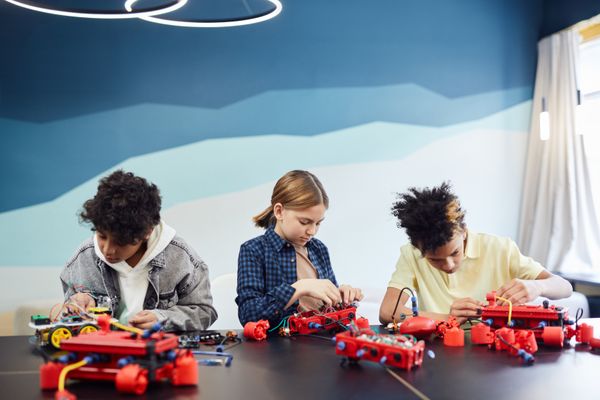
Children learning and playing with technology together
Go Deeper

Resources & Further Reading

For those who want to explore the research and evidence behind this letter.

The Ask

All We're Asking For Is a Conversation

Three starting points — each entirely in your hands.

1

A 30-Minute Conversation

We'd welcome the opportunity to sit down with you and your academic leadership team. We'll bring the research, the global evidence, and concrete examples. No commitment — just a conversation.

2

A Session with Students

If you're curious to see how students respond, we'd love to run a single one-hour session on entrepreneurial thinking with students. One class, one afternoon. Let the children's response speak for itself.

3

A Bridge to the Research Community

Prof. Sarasvathy will be in Bangalore this June and July. Through Upekkha's relationship with her research group, we can facilitate a direct conversation between HSEA's leadership and one of the world's foremost authorities on entrepreneurship education. She has expressed willingness to engage.

We are not proposing a specific programme. We are offering to help HSEA explore this space — and to bring the world's best thinking to your door.
The Community

HSEA Parents Who Believe in This

This letter represents a shared conviction. Add your name.

0 parents have signed this letter

Add Your Name

Not displayed publicly — only for follow-up.